Renters Insurance
My Role
Skills & Tools
Product Design | Figma, Adobe Suite
Team
1 Product Designer, 2 Product Analyst, 2 Engineers
Timeline
January - April 2025
© 2026 Red Ventures. All rights reserved. Created by Kierra Williamson as part of employment at Red Ventures.
Certain details have been redacted for confidentiality.
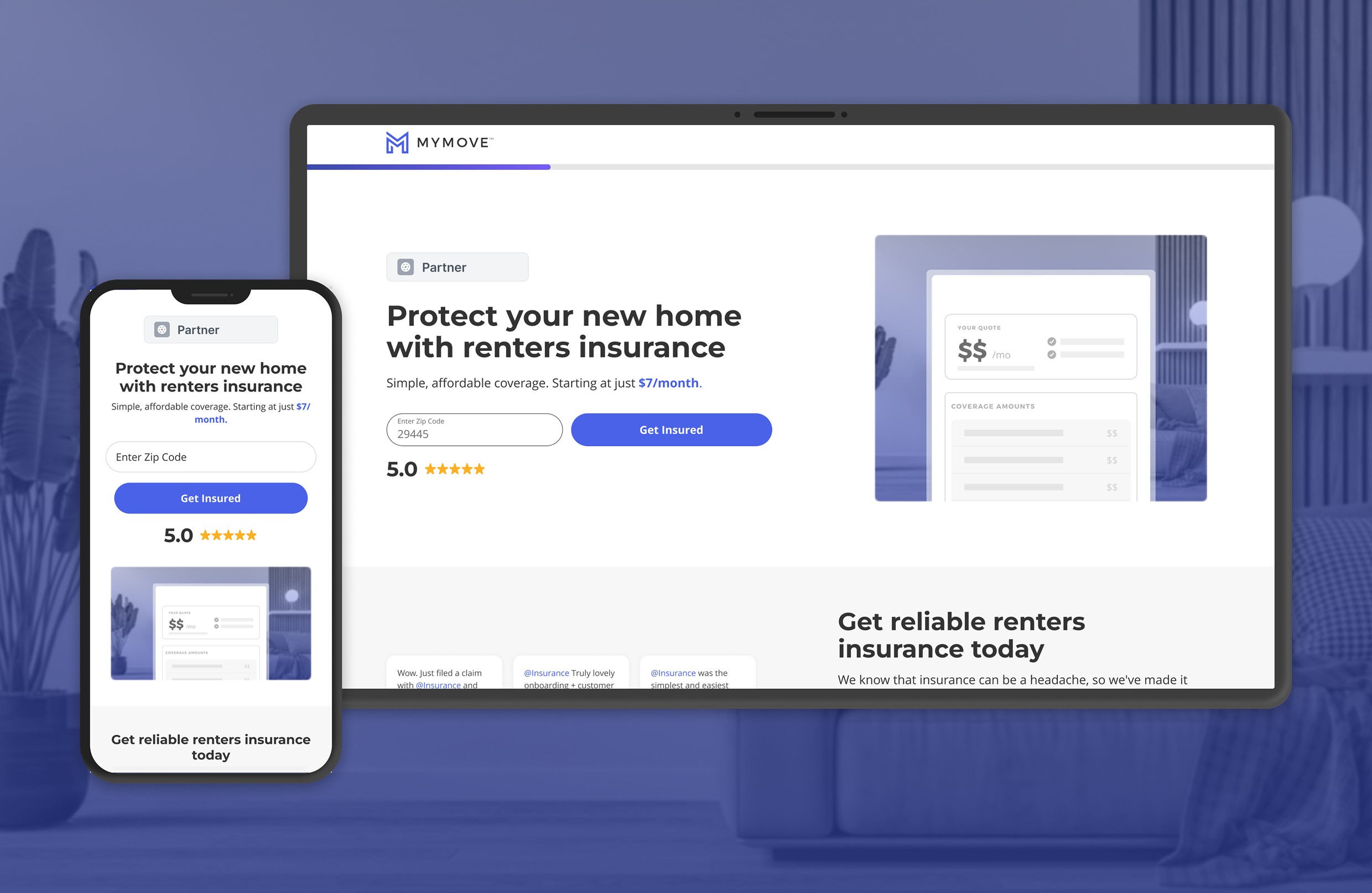
When moving, insurance is the last thing on most people's minds, even though it's one of the most time-sensitive decisions they'll face. Our previous renters insurance experience made that problem worse by sending users off-platform entirely, breaking the post-coa flow at one of its most critical moments.
My Task: Redesign it from the ground up, embedding the experience natively, end to end, which resulted in a +300% increase in quote rate.
300%
"This flow helped set the foundation for how we think about all third-party integrations going forward." — Internal Stakeholder
Problem
Renters insurance is essential during a move, but our initial experience didn't adequately highlight its importance. Users were redirected to the external partner's site mid-journey, which eroded trust and led to decreased quote and policy generation and downstream engagement.
We initially planned to divide this project into testable phases. Phase A involved integrating the partner's questions into one of our existing modal templates for partner pages, creating a more polished but ultimately flawed experience. Why create another click-out when we already knew they negatively impacted both us and the user?
After aligning with the broader team, we agreed to bypass Phase A and move directly to Phase B: an embedded transactional integration. This would be a first for both us and the partner, presenting challenges like ambiguous requirements, limited asset sharing, API constraints, and a lot of self-directing.
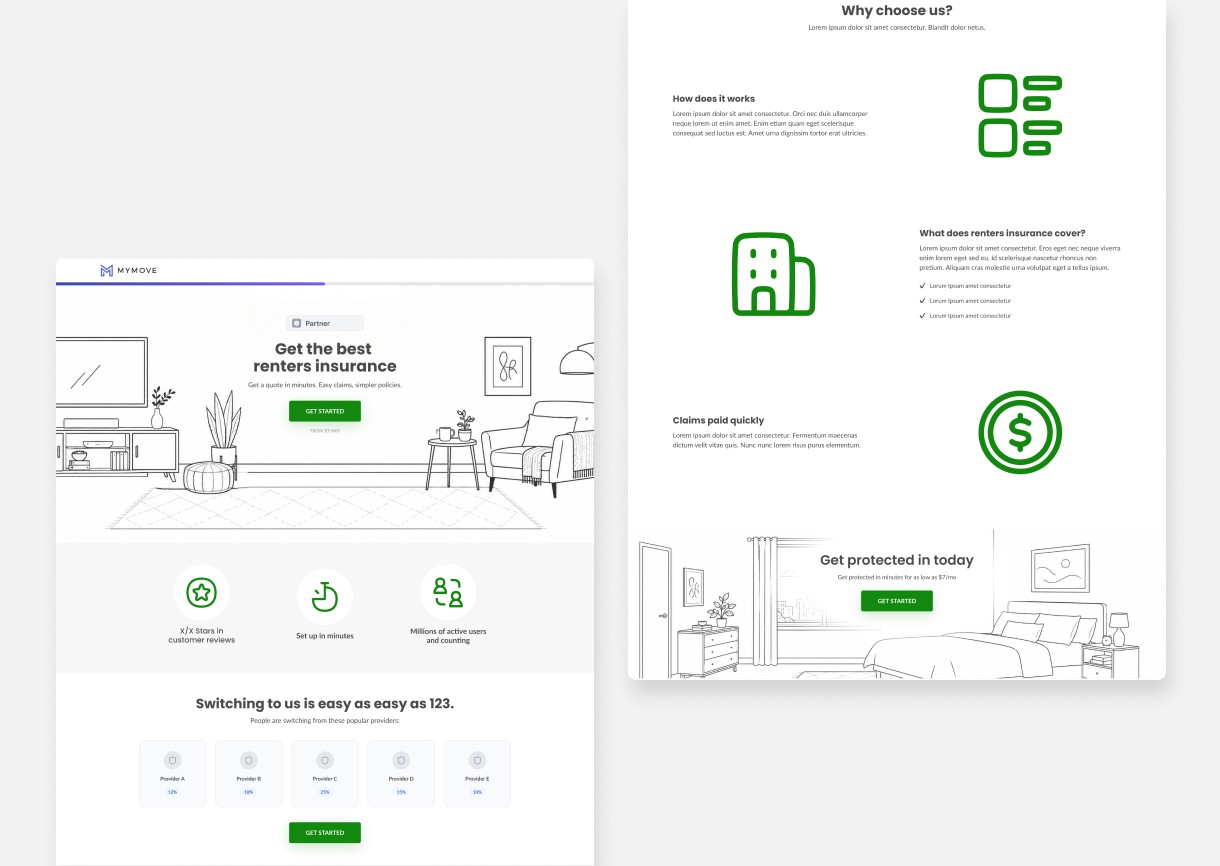
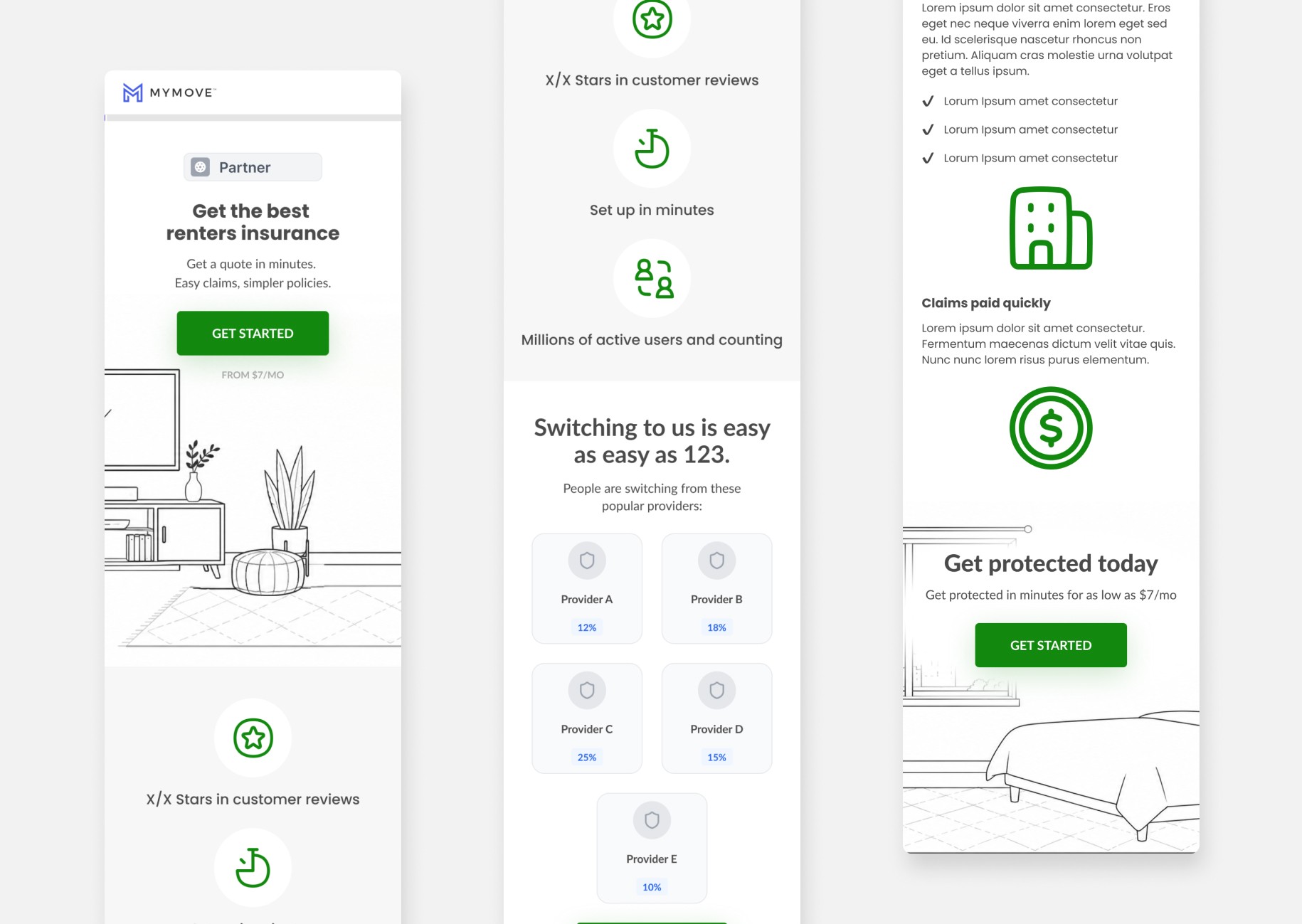
Original click-out partner page, Desktop and Mobile
The Challenge Landscape:
Business Needs:
Design Needs:
Integrate seamlessly with existing templates while building a foundation for future partner integrations.
Partner Needs:
Collaborating with their product, legal, and creative teams across multiple time zones with limited asset access.
Technical & User Needs
Work within API limitations and design for a mobile-heavy audience in a high trust, transactional moment.
Research & Insights
As stated, what began as a seemingly simple task of recreating the partner's flow using existing internal modules quickly evolved into a comprehensive redesign challenge. The partners' insights weren't applicable since they were all click-out experiences, giving me full creative control to solve the problem.
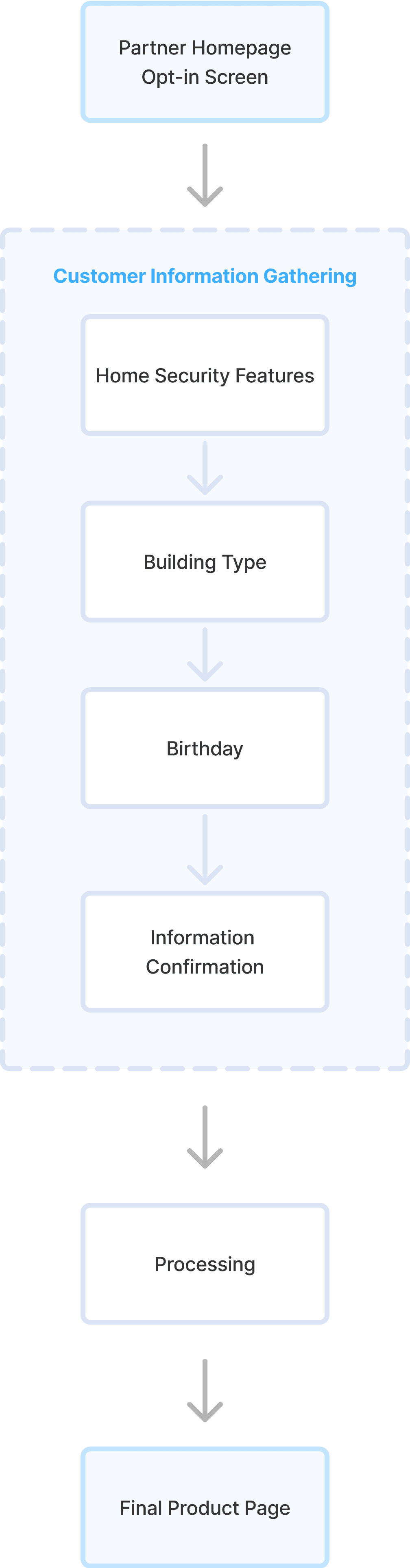
Through research of embedded experiences across industries and user journey mapping, I found our flow could be condensed to just 3 steps versus the original standard of 11+, made possible by removing bundling options and simplifying the decision architecture. This meant building maximum trust and value in minimal interactions.
My Condensed Renters Flow
Note: Optimized for our moving platform where we have existing customer data. Since users completed extensive decision-making, this flow prioritizes conciseness and trust.
Solution
The goal was to make this feel like a natural part of the moving journey, not a detour.
An interactive quote module with prefilled form fields to reduce cognitive load, integrated partner branding seamlessly within our design system, and built in trust signals to support user confidence.
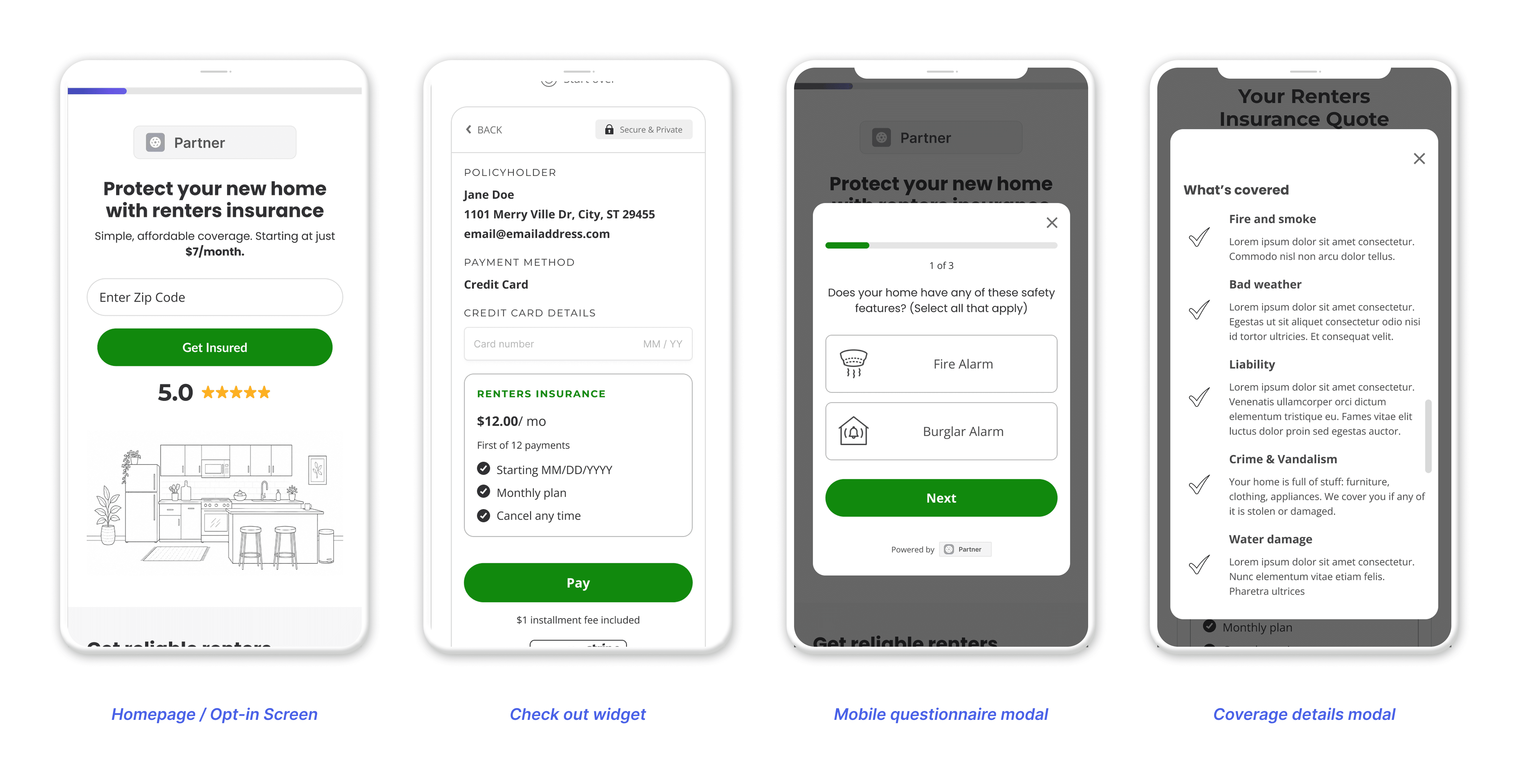
Decisions were made with a mobile-first, low-friction mindset. The experience was designed not just to work for this integration, but to establish a repeatable pattern for future partner flows.
My technical documentation through the process was detailed enough that engineering leads flagged it specifically for its clarity, something I took seriously knowing this would set the standard going forward.
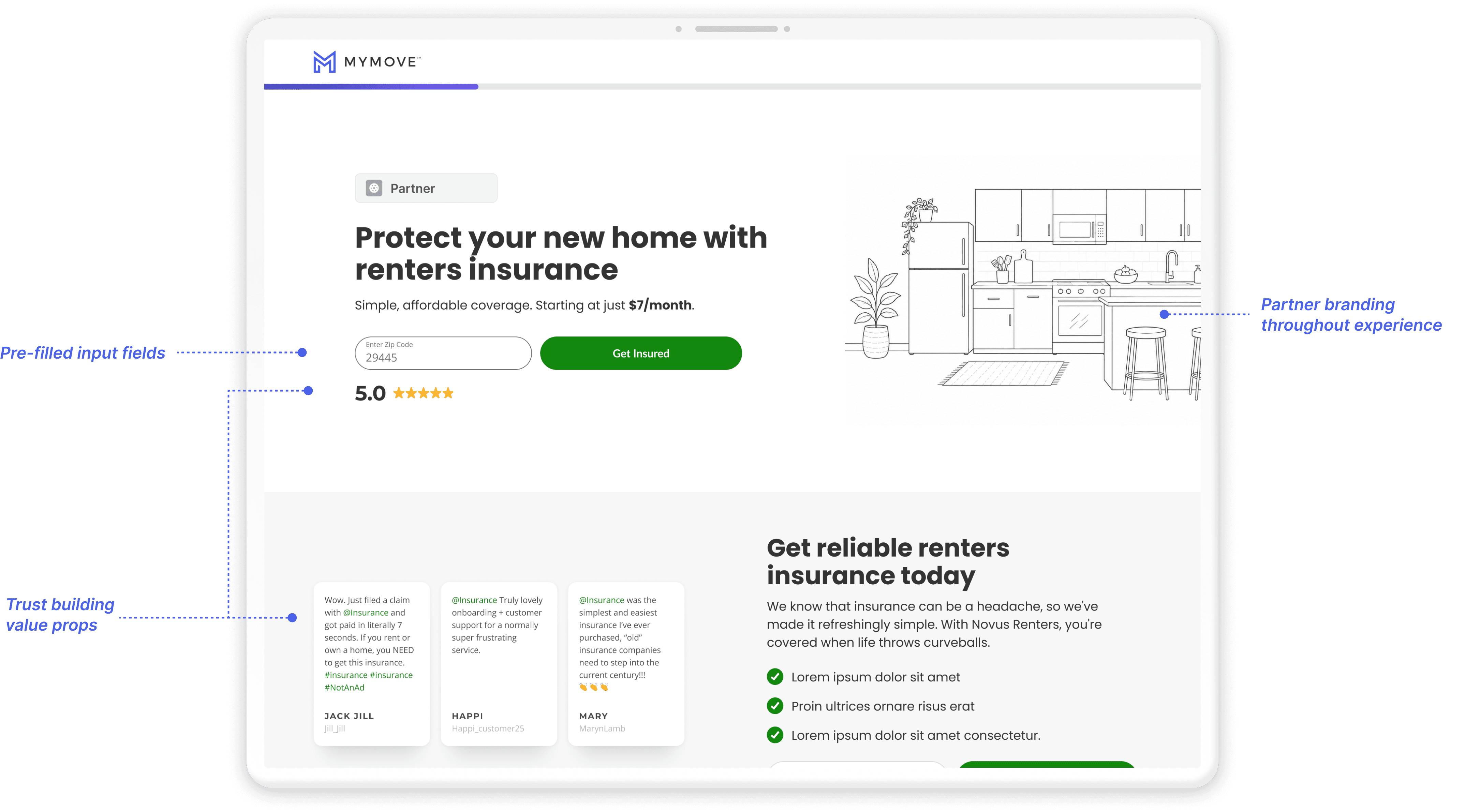
Home screen / Opt-in
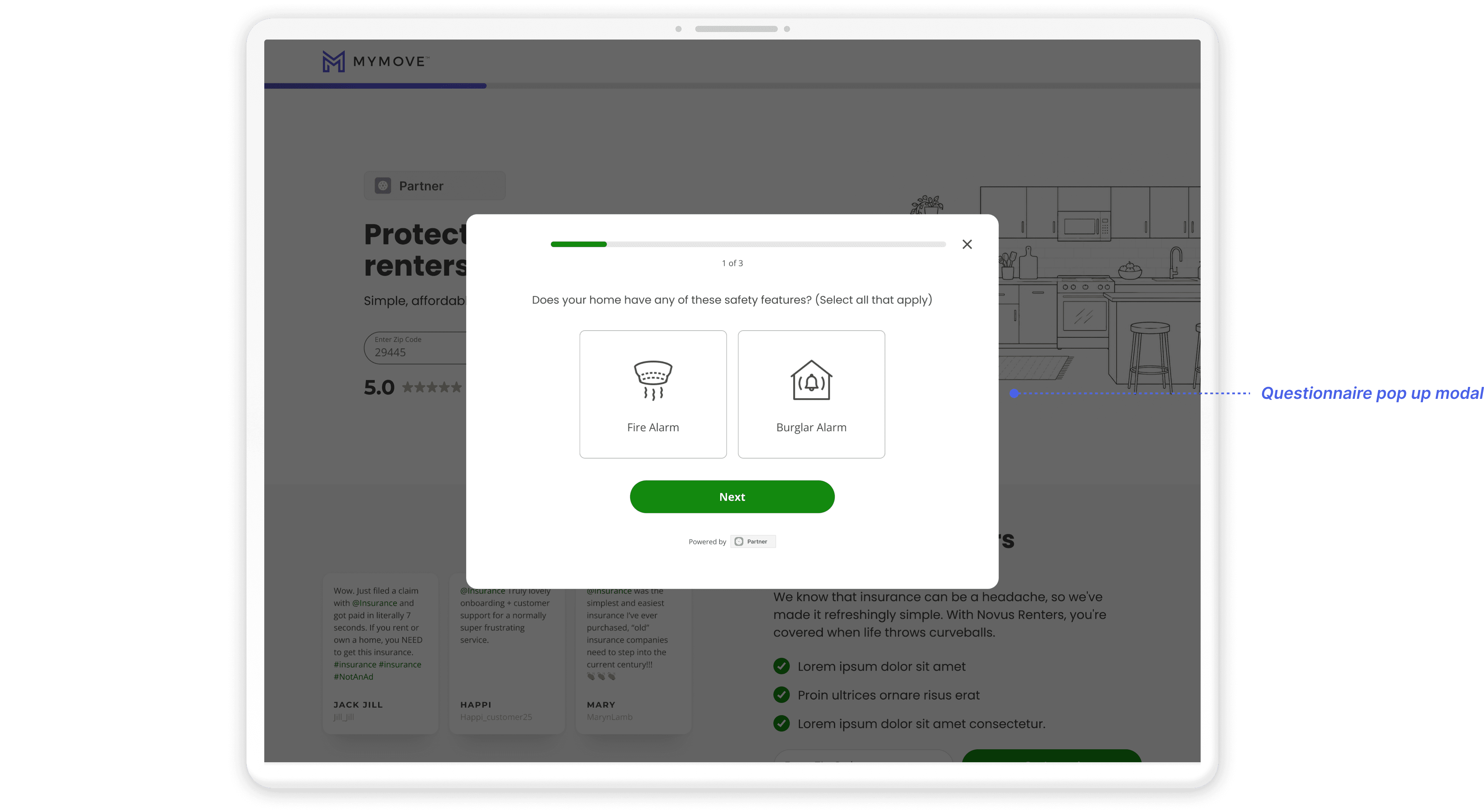
User completes a brief questionnaire after opt-in
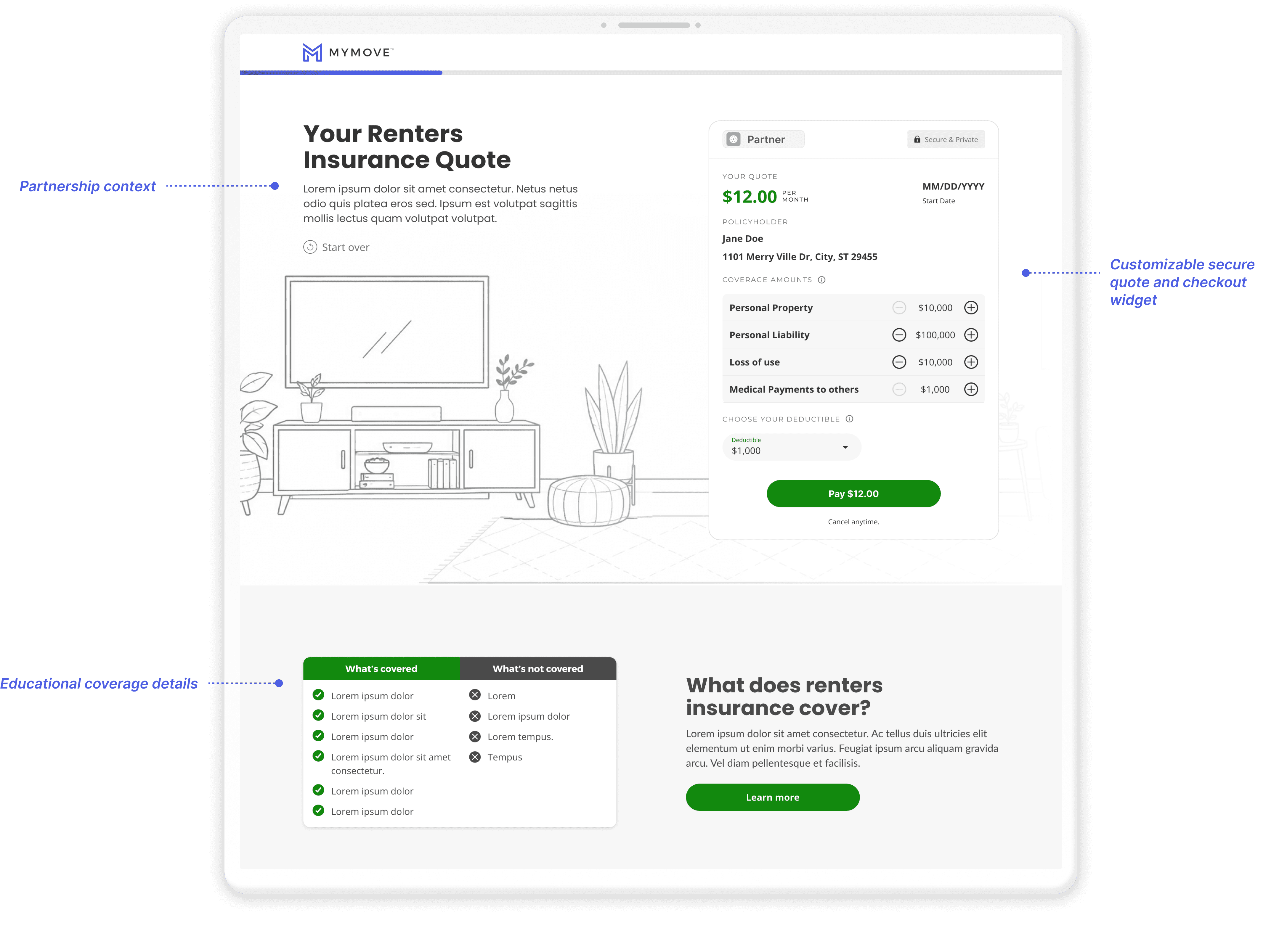
Results Page
Plot Twist
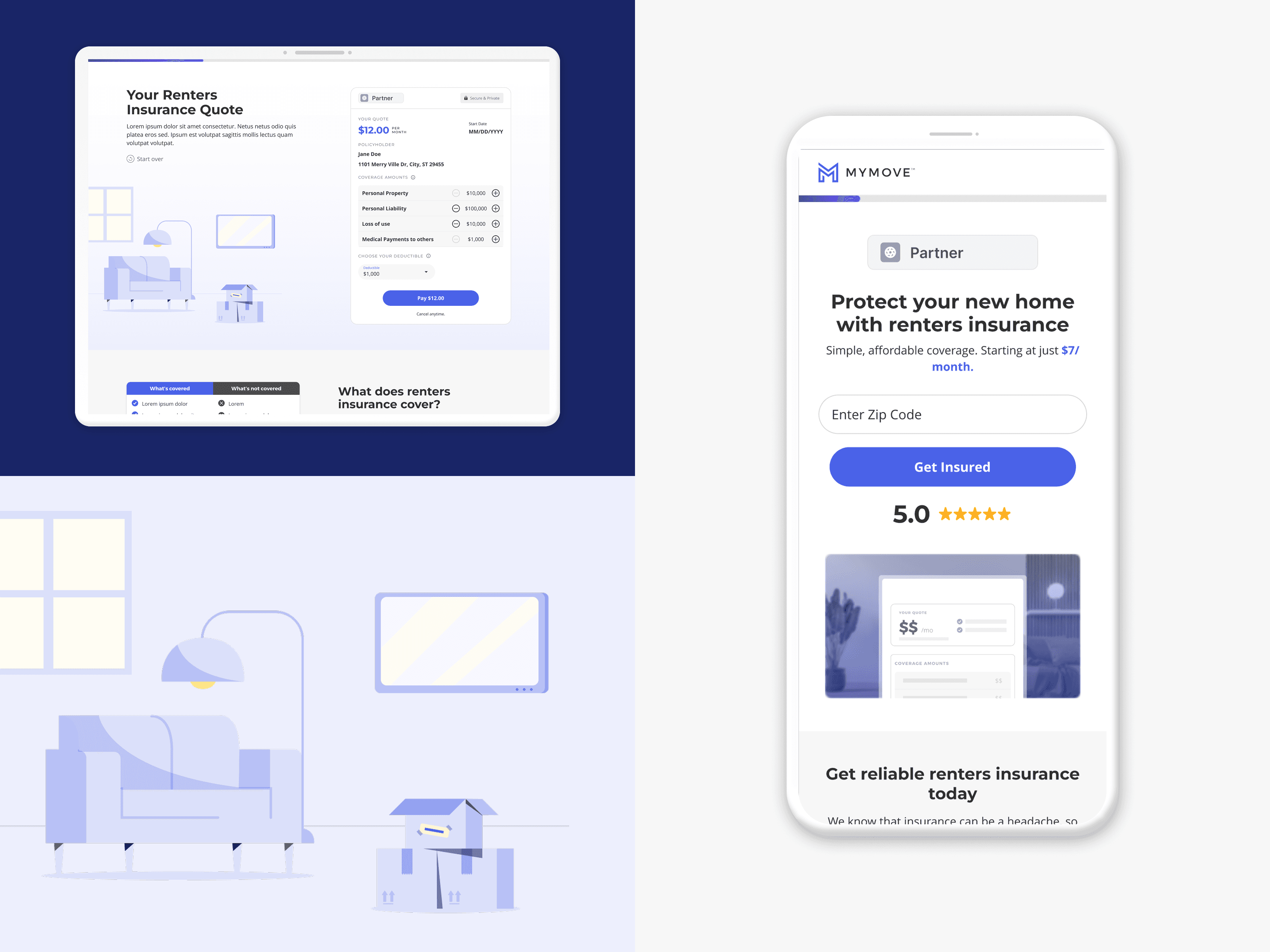
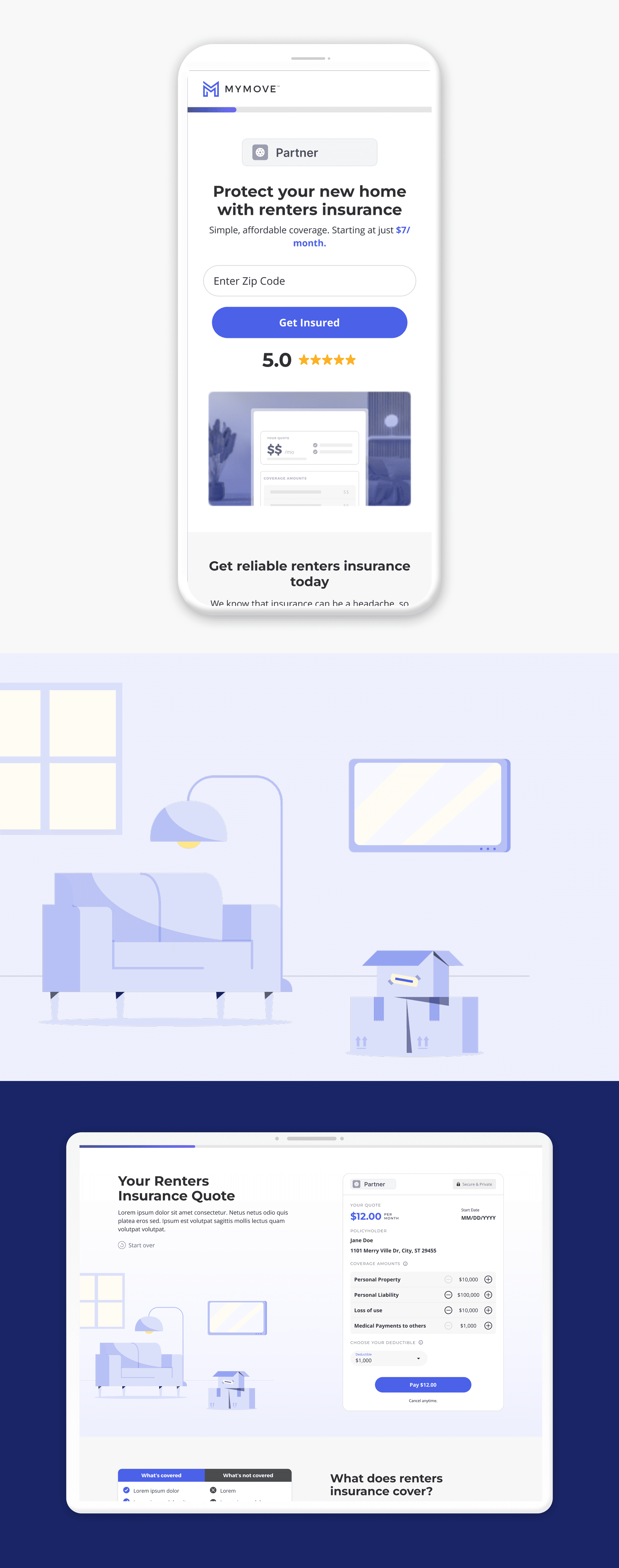
Right before the launch, the partner's product team unexpectedly withdrew their approval for the co-branded UI, even after sharing assets and reviewing the design progress throughout the project. To keep us on schedule, I swiftly rebranded the entire experience, ensuring that all essential trust signals and value propositions remained intact. The layout, flow logic, and content hierarchy were all preserved.
Results & Final Thoughts
We achieved significant wins in quote generation post-launch and have continued testing and iterating new strategies to strengthen trust and improve overall flow performance.
This project taught me how to build something solid when almost nothing is certain. Ambiguous requirements, limited partner collaboration, shifting direction right before launch, none of it stopped the work from shipping and performing. A few things I'd carry into every project after this:
Design with constraints, not around them
API limitations, template requirements, etc. aren't obstacles, they're the parameters. Working within them while still advocating for the user is the job.
Pivoting fast doesn't mean losing focus
When the partner pulled approval days before launch, the core objectives didn't change. Staying locked on what actually mattered made the reskin possible under pressure.
Trust is a design problem
When brand recognition is limited, every element has to earn user confidence. Copy, layout, social proof, visual hierarchy. Nothing can be passive.
Think modularly
This integration became the foundation for how the team approached all future partner flows. That only happens when you build with repeatability in mind from the start.